Details
- Title: Clinically Accessible Movement Analysis using Single and Multiview Video
- Speakers: R. James Cotton, MD, PhD, Shirley Ryan AbilityLab, Northwestern University
- Time: Wednesday, June 25, 2025 at 9:00 AM Pacific Time
Abstract
Markerless motion capture offers a promising path toward high-quality movement analysis in both clinical and research settings. However, translating video data into clinically meaningful insights requires not just ease of use, but also accuracy sufficient to capture clinically relevant outcomes and differences.
In the first part of the webinar, Dr. Cotton will discuss his lab’s recent advances in markerless motion capture that address these needs using both single-camera and multiview video approaches. Key to these advancements are high-performance biomechanical simulators (e.g., MuJoCo), which enables novel machine learning approaches to estimate kinematics and kinetics from different data sources. Dr. Cotton will explain the advantages of these simulators, how they compare to past approaches, and discuss the new opportunities they have given rise to in clinical applications. He will also discuss what large biomechanical datasets enable, such as imitation learning approaches to infer torques and muscle activations from kinematics, and even multimodal language models that answer clinically meaningful questions about movement.
In the second part of the webinar, Dr. Cotton will lead an interactive tutorial on fitting biomechanics from a sample monocular video using an end-to-end optimization based approach.
Cotton, R. J. (2024). Differentiable Biomechanics Unlocks Opportunities for Markerless Motion Capture. arXiv preprint arXiv:2402.17192.
This webinar is offered jointly with the Mobilize Center, an NIH-funded Medical Rehabilitation Research Resource Network Center at Stanford University.
Our Speaker
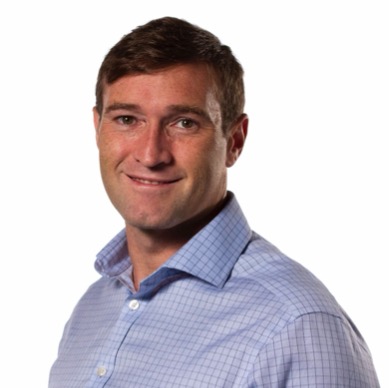
R. James Cotton
Assistant Professor
Dr. R. James Cotton is an electrical engineer, neuroscientist, and physiatrist working as a physician-scientist at Shirley Ryan AbilityLab and Assistant Professor in the Northwestern University Department of Physical Medicine and Rehabilitation. His lab works at the intersection of artificial intelligence, wearable sensors, computer vision, causal and biomechanical modeling, and novel technologies to monitor and improve rehabilitation outcomes. In particular, they focus on methods that can be easily translated and disseminated at scale into the clinic or real world. This includes biomechanical analysis using computer vision, which we can integrate into the clinic, and establishing how this can be used to improve clinical outcomes.